
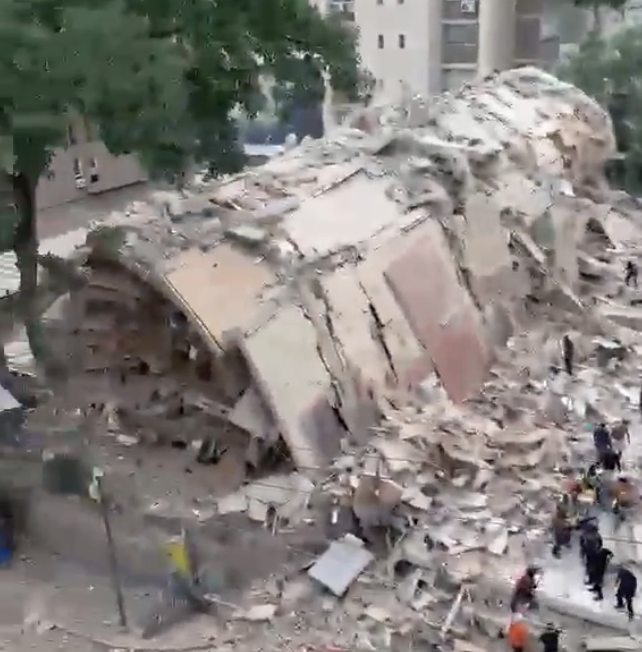
A powerful 7.1 magnitude earthquake shook Caracas, Venezuela’s capital, on Wednesday afternoon, causing buildings to collapse and panic among residents. The US Geological Survey (USGS) reported two strong quakes near the Venezuelan coast, prompting emergency evacuations as structures cracked and swayed.
Double Tremors Shake City
The first quake hit at 6:04pm local time about 17 miles northwest of Montalbán, with a depth of 8 miles. Just one minute later, a second quake measuring 7.5 magnitude struck 10 miles southwest of Morón at a depth of 6 miles, according to the USGS.
Buildings Crumble Amid Chaos
Residents fled swaying buildings in Caracas, reporting visible cracks and collapsed walls, exposing furniture on the streets. Dust clouds appeared in busy neighbourhoods, with many trapped outside, visibly shaken by the intense shaking.
Tsunami Warnings Issued
The US Pacific Tsunami Warning Centre warned of possible tsunami waves along the coasts of Venezuela, Bonaire, Curacao, and Aruba. People near coastal areas were urged to move away from water, harbours, and inlets as a precaution.
Official Response And Safety Advice
Interior Minister Diosdado Cabello described the quake’s impact in Caracas’ Altamira district as “alarming” with collapsed buildings, and urged citizens to stay outside amid ongoing aftershocks. He assured the public that rescue and aid operations are underway to assist those affected.
Witnesses Describe Intensity
“The building really shook from side to side. Unreal.
The force was incredibly strong,” said Caracas resident Roberto Damas. “We were walking and it was tossing us around.
Everything in the apartment fell. Thank God we were able to get out.”
Authorities urged people to check on vulnerable family members and friends, stressing caution amid the continuing tremors.
The earthquakes are among the strongest to hit Venezuela in over a century.
Images of Maiquetía International Airport during the magnitude 7.1 earthquake in Caracas, Venezue This is a developing story and more details will follow.Originally published by UKNIP.