

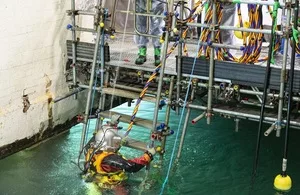
A specialist team of nuclear divers has entered Sellafield’s oldest and most hazardous storage pond, marking the first human dive into the site since 1958. Josh Everett, a diver from the elite US-based Underwater Construction Corporation Ltd, made history in December 2022 by working inside the infamous Pile Fuel Storage Pond—one of the world’s most challenging nuclear clean-up sites.
The sprawling 100-metre outdoor pond dates back to the 1940s and was originally built to cool and store spent fuel from the Windscale Piles reactors, the UK’s very first nuclear reactors linked to the post-war atomic weapons programme. Operations at the pond ceased in the 1960s, leaving behind a toxic mixture of nuclear sludge, algae, and contaminated debris. Since then, decommissioning the site has been a painstaking and complex mission.
Divers access the pond through a custom platform and work in shifts lasting up to 3.5 hours on a metal dive stand with a shielded floor. Their primary task is to retrieve radioactive sludge and debris from every corner of the pond.
While most nuclear clean-ups rely on robots, this project required human divers due to the complexity of the environment. Josh Everett and his expert team have extensive experience working in radioactive environments worldwide, including UK sites such as Dungeness A and Sizewell A.
“The Pile Fuel Storage Pond diver project has been 5 years in planning and a huge success,” said Carl Carruthers, Sellafield Ltd’s head of legacy pond programmes. “Safety has been our top priority. The divers are constantly monitored and communicate with supervisors.” Their pioneering work is expected to inform future nuclear pond clean-up projects across the UK.
Once the pond is fully cleared, the water will be drained to allow for the building’s final demolition. The entire decommissioning project is projected to cost around £212 million and is scheduled to be completed by 2039, nearly a century after the pond’s construction.
David Redpath from the Nuclear Decommissioning Authority praised the initiative, stating, “This project marks an important milestone. It showcases innovative techniques and teamwork to manage the UK’s nuclear legacy safely and securely.”
The Office for Nuclear Regulation has confirmed the operation is safe. Inspector Alan Wylie said, “Our specialists assessed the safety and approved the divers’ work, enabling progress where robots can no longer reach.”
Originally published by UKNIP.